Force Urbania vs Tempo Traveller
-
 Brand Force Motors
 Seats 8 to 17
 Suitable For Groups Comparing Both Options
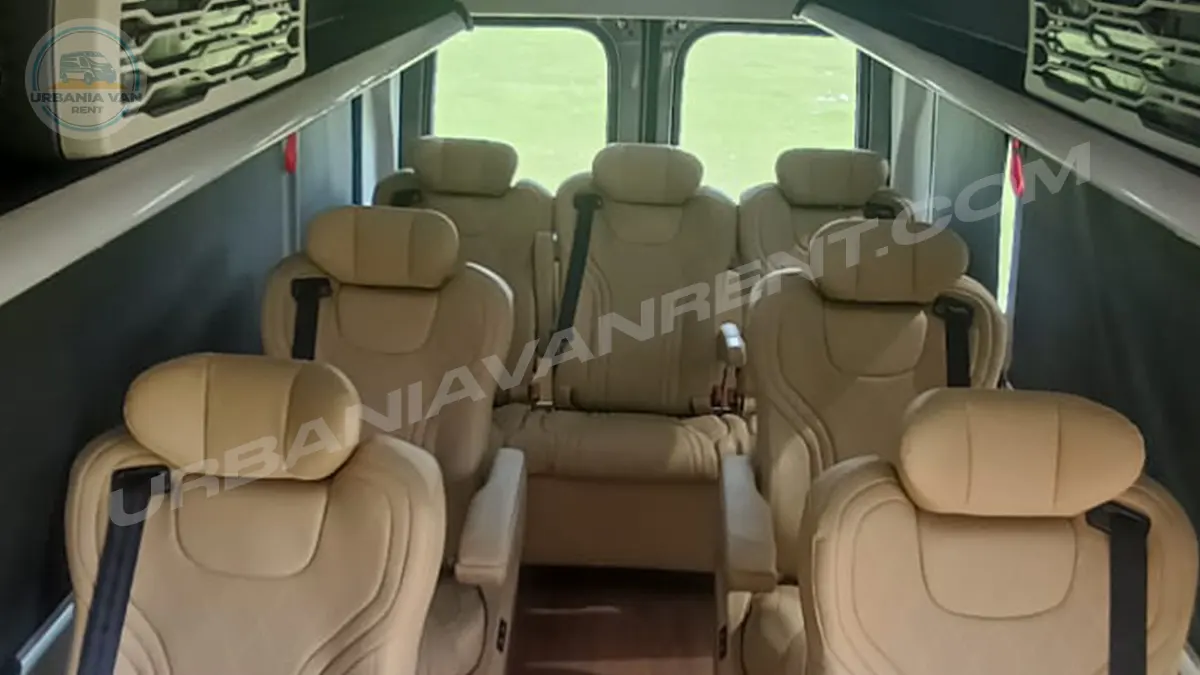
 Facilities AC vents, Stylish Look, USB Charging Ports
 -
Per KmRate
 35
35
-
Full DayPrice7,500 Onwards


We rent Urbania vans, so you would expect this page to tell you the Urbania wins every time. It does not. For a fair number of trips a standard tempo traveller is the sensible booking and we will say so on the phone, because a group that was oversold a vehicle does not come back.
What follows is the comparison we actually give callers: where the two vehicles genuinely differ, where the difference is marketing, and a straight answer on which one to book for which kind of trip.
The Short Answer
- Book a tempo traveller for short local runs, half-day city sightseeing, staff shuttles and young groups on a tight budget where the journey is under three hours.
- Book a Force Urbania for anything long, anything in the hills, anything carrying elders or children, and anything where the group has to arrive in a fit state to do something - a wedding, a client meeting, a temple darshan.
The dividing line is roughly the three-hour mark and the presence of a gradient. Below that, the extra you pay for an Urbania buys comfort you will not especially notice. Above it, you notice every kilometre.
Side-by-Side Comparison
Both vehicles are made by Force Motors, which is the source of most of the confusion - the Traveller and the Urbania come from the same manufacturer and are frequently listed interchangeably by operators. They are different vehicles.
| Force Urbania | Standard Tempo Traveller | |
|---|---|---|
| Seating | 9, 12, 13, 16 and 17 seater variants | 9 to 26 seater variants |
| Seat type | Push-back seats with real recline, individual armrests | Mostly fixed-back or limited-recline seats |
| Body construction | Monocoque body | Ladder-frame body |
| Ride quality | Settles quickly, noticeably better on hairpins | More body movement on winding roads |
| Cabin height | High roof, stand-up cabin in most variants | Lower roof, more stooping |
| Boarding | Wide door with a proper step | Higher, narrower step in many models |
| Air conditioning | Individual overhead vents per row | Often a single duct, uneven cooling |
| Luggage | Dedicated rear boot | Aisle, rear bench or roof carrier |
| Interior finish | Modern dashboard, USB charging, infotainment | Basic, utilitarian |
| Typical per km rate | From Rs 35 | Usually lower |
| Best suited to | Long distance, hills, elders, premium occasions | Short local runs, budget group transport |
Where the Difference Actually Shows
On seat comfort over long hours
This is the single largest practical difference. The Urbania's seats recline properly and have individual armrests; most tempo traveller seats do not, or recline a token amount. On a 90-minute run nobody cares. On the nine-hour Uttarkashi to Guptkashi leg of a Char Dham yatra, it is the difference between a group that can walk to the temple on arrival and one that cannot.
On hill roads
The monocoque body sits lower and settles faster through a corner than a ladder-frame vehicle. On the plains this is invisible. On the Bhagirathi valley road or the climb to Mussoorie it matters a great deal, particularly for anyone prone to travel sickness - which, on a family trip of fourteen, is usually at least one person.
On boarding, for elderly passengers
A high roof and a wide door with a proper step sound like small things until you watch a 70-year-old board a vehicle twelve times in a day. On pilgrimage routes this is consistently the feedback we get back, ahead of seat comfort.
On luggage
The Urbania has a separate boot. A tempo traveller usually puts luggage in the aisle, on the rear bench or on a roof carrier. For a weekend trip either works. For a twelve-day yatra with bedding and prasad, aisle luggage means climbing over bags at every stop.
On air conditioning
Individual overhead vents versus a single duct. The practical result is that the back three rows of a tempo traveller are frequently warmer than the front, which is exactly where the children and elders usually end up sitting.
Where the Difference Is Overstated
In fairness, some of what is claimed for the Urbania does not hold up, and you should not pay extra for it.
- Safety. Both are commercially registered, insured and inspected vehicles with professional drivers. The Urbania is not meaningfully safer; it is more comfortable.
- Speed and journey time. Broadly identical on the same route. Nobody arrives earlier for having booked an Urbania.
- Seat count for large groups. If you have 20 or 25 people, a larger tempo traveller genuinely does something the Urbania cannot - the Urbania tops out at 17.
- Air conditioning in principle. Both have AC. The difference is in distribution, not in whether it exists.
If an operator tells you the Urbania is "safer" or "faster", they are padding. The real arguments are seats, suspension, boarding and luggage.
Cost - What the Gap Really Is
The Urbania costs more per kilometre. Our published rates start at Rs 35 per km for the 9, 12 and 13 seater; a tempo traveller from most operators sits below that. Here is our full rate card so you can do the comparison against any quote you have in hand:
| Vehicle Type | Rate Per km | Driver Charges per day |
|---|---|---|
| 9 Seater Luxury Urbania | 35/- | 700/- |
| 12 Seater Luxury Urbania | 35/- | 700/- |
| 13 Seater Luxury Urbania | 35/- | 700/- |
| 16 Seater Urbania | 38/- | 700/- |
| 17 Seater Urbania | 40/- | 800/- |
| 9 Seater Premium Maharaja Urbania | 50/- | 800/- |
| 12 Seater Maharaja Urbania | 50/- | 800/- |
The useful way to think about the gap is per person, per hour of travel. Split across twelve passengers on a single day trip, the difference between the two vehicles is a small amount each. Judged that way, most groups conclude the Urbania is worth it for a long day and not worth it for a short one - which is exactly the right conclusion.
Full day packages
| Vehicle Type | Per Day Rate (80 KM/8 Hours) | Per Day Rate (250 KM/16 Hours) |
|---|---|---|
| 9 Seater Luxury Urbania | 7,500/- | 15,000/- |
| 12 Seater Luxury Urbania | 7,500/- | 15,000/- |
| 13 Seater Luxury Urbania | 8,000/- | 16,000/- |
| 16 Seater Urbania | 8,500/- | 17,000/- |
| 17 Seater Urbania | 9,000/- | 18,000/- |
| 9 Seater Premium Maharaja Urbania | 11,000/- | 23,000/- |
| 12 Seater Maharaja Urbania | 11,000/- | 23,000/- |
One caution when comparing quotes: our per day packages include toll, state taxes and fuel, while the per km plan does not. A cheaper-looking quote from elsewhere may simply be excluding more. Ask any operator which of those five items - driver allowance, toll, state tax, parking, night charge - are inside their number. Our full breakdown is on the rate page.
Which to Book for Your Trip
City sightseeing, half day
Either. If budget is the deciding factor, take the tempo traveller. The comfort gap over four hours is real but small.
Airport transfer
Urbania, mainly for the boot. A group of twelve with check-in luggage in a vehicle without a separate luggage compartment is a genuinely unpleasant thirty minutes.
Same-day trip to Agra, Mathura or Haridwar
Urbania. These are eight to twelve hour days once you count the return, and this is where the seats start to matter. See Agra or Haridwar.
Char Dham, Kedarnath or any hill route
Urbania, without hesitation. Hills, long days and elderly pilgrims is the exact combination the vehicle is good at.
Wedding and event shuttles
Urbania. Guests arrive dressed rather than crushed, and the vehicle waiting outside says something about the host whether you like it or not.
Corporate offsite
Urbania for anything over two hours, particularly if people plan to work or talk on the way. See our corporate offsite guide.
Daily staff transport
Tempo traveller. Short, repeated, budget-sensitive runs are precisely what it is for.
Groups of 20 or more
A larger tempo traveller or a mini coach. The Urbania stops at 17 seats, and two Urbanias for 22 people rarely beats one larger vehicle on cost.
Choosing Your Urbania Variant
If the comparison has landed on the Urbania, the next question is which one. Seat counts exclude the driver, and we recommend booking one size above your headcount if luggage is heavy.
- 9 seater - a single family or a small team, Rs 35 per km.
- 12 seater - the most-booked variant, Rs 35 per km.
- 13 seater - a little more room at the same Rs 35 rate.
- 16 seater - best value per head for larger groups, Rs 38 per km.
- 17 seater - maximum capacity, Rs 40 per km.
- 9 seater Maharaja - wider seats, deeper recline, Rs 50 per km.
Call +91 87507 89405 or message us on WhatsApp with your route and group size, and we will tell you which vehicle we would put our own family in for that trip.